

Last Updated: November 8, 2026
Quick Summary
The ingredients to avoid in skincare are formaldehyde-releasing preservatives like DMDM hydantoin, undisclosed fragrance that can hide phthalates, ethanolamines such as DEA and TEA, PFAS in long-wear formulas, and coal tar. Dermatologists advise patch testing one new product at a time, since most reactions are irritation or allergy rather than systemic toxicity.
- Formaldehyde rarely appears by name; check the back panel for releasers like DMDM hydantoin and quaternium-15.
- Paraben evidence is weaker than claimed, and paraben-free formulas sometimes swap in a formaldehyde releaser.
- Fragrance-free means no added scent, while unscented can mean a masking fragrance was added.
- Ethanolamines combined with certain preservatives can form nitrosamines, classified as probable carcinogens.
- During pregnancy, confirm retinoids, salicylic acid, and hydroquinone with your clinician before use.
Table of Contents
- Why Some Skincare Ingredients Deserve a Second Look
- 1. Formaldehyde and Formaldehyde-Releasing Preservatives
- 2. Parabens and the Preservative Question
- 3. Phthalates and Synthetic Fragrance
- 4. Ethanolamines: DEA, MEA, and TEA
- 5. PFAS and Other Persistent Chemicals
- 6. Coal Tar, Colorants, and Contaminants
- What Dermatologists Say About Ingredients to Avoid in Skincare
- Skincare Ingredients to Avoid When Pregnant
- Building a Routine: Ingredients to Avoid in Skincare Routine
- Frequently Asked Questions
Why Some Skincare Ingredients Deserve a Second Look
The ingredients to avoid in skincare are not a single blacklist. They are a set of chemicals and contaminants where the evidence, the dose, and your own skin type all change the answer. That nuance matters, and it is exactly what most "toxic ingredient" lists leave out.
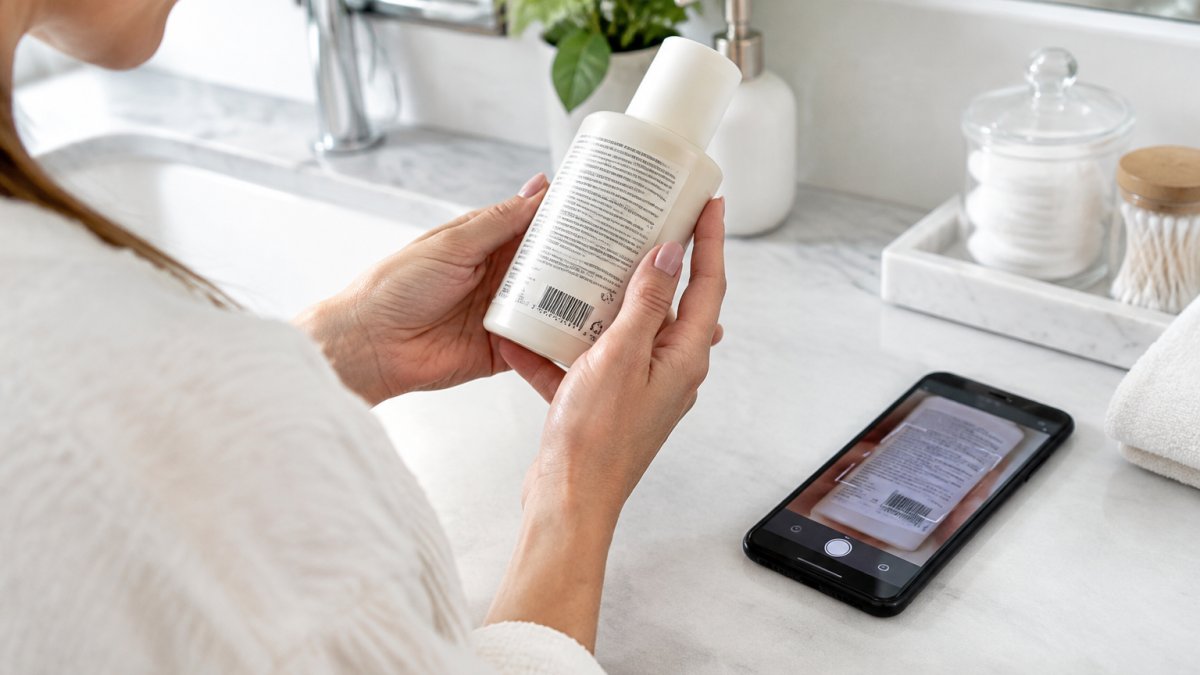
Across the skincare industry, the same handful of names get flagged as dangerous regardless of context. A preservative that keeps mold out of a water-based cream is not the same risk as a contaminant that should never be in the bottle at all. Treating them identically pushes people toward products that spoil, irritate, or simply cost more for no benefit.
Below, we walk through the six families that come up most often, explain what the research actually supports, and show you how to check a label in under a minute. The goal is not fear. It is a working filter you can apply in the aisle or on a product page.
FDA guidance on cosmetics and ingredient safety
1. Formaldehyde and Formaldehyde-Releasing Preservatives
Formaldehyde is a known human carcinogen, and it is the ingredient most worth taking seriously. It rarely appears on a label by that name. Instead, preservatives release small amounts of it over time to keep bacteria and mold out of water-based products.
How to Spot Them on a Label
Look for these INCI names on the ingredient list:
- DMDM hydantoin
- Diazolidinyl urea
- Imidazolidinyl urea
- Quaternium-15
- Bronopol
- 5-bromo-5-nitro-1,3-dioxane
The risk depends on concentration and on how much skin the product covers. A rinse-off cleanser is a different exposure than a leave-on lotion applied daily. People with sensitive skin or contact dermatitis often react to these preservatives even at low levels, which is why patch testing matters.
Watch out: "Formaldehyde-free" on the front of a bottle does not guarantee the formula avoids releasers. Check the back panel.
2. Parabens and the Preservative Question
Parabens are among the most studied preservatives in cosmetics, and the evidence against them is weaker than the internet suggests. They can mimic estrogen in laboratory settings, but the amounts used in personal care products are far below levels shown to have any hormonal effect in humans.
That does not make them harmless for everyone. Some people develop contact dermatitis from parabens, and anyone with a known allergy should avoid them. For most people, the bigger risk is a product that skips effective preservatives and grows bacteria.
If you prefer to avoid them anyway, that is a reasonable choice. Just read the replacement carefully. "Paraben-free" formulas still need a preservative system, and sometimes it is a formaldehyde releaser instead. Look for phenoxyethanol, sodium benzoate, or potassium sorbate as alternatives.
3. Phthalates and Synthetic Fragrance
Phthalates rarely appear by name because fragrance blends are protected as trade secrets. The word "fragrance" or "parfum" on a label can legally hide dozens of compounds, including phthalates used to make scent last longer.
This is the hardest category to verify, and the most honest advice is simple: if fragrance is listed and you have sensitive skin, treat it as a question mark. Synthetic fragrance is one of the most common causes of allergic contact dermatitis in cosmetics.
For anyone who reacts easily, fragrance-free formulas are the safer starting point. Not "unscented," which can mean a masking fragrance was added. Fragrance-free means no added scent at all.
4. Ethanolamines: DEA, MEA, and TEA
Ethanolamines are used as emulsifiers and foaming agents, and they show up as DEA, MEA, and TEA on labels. The concern is not the ingredient alone but what it can form: when combined with certain preservatives, ethanolamines can create nitrosamines, which are classified as probable carcinogens.
The practical takeaway is to avoid products that list an ethanolamine alongside a nitrosamine-forming preservative. On their own, in rinse-off products, the risk is low. In leave-on products applied to large areas, it is worth a second look.
Cosmetic Ingredient Review assessments of ethanolamines
5. PFAS and Other Persistent Chemicals
PFAS, or per- and polyfluoroalkyl substances, are the "forever chemicals" that do not break down in the body or the environment. They have been found in some cosmetics, particularly long-wear and water-resistant formulas.
These are not ingredients you can easily spot, because they are often not disclosed. The practical filter is to be skeptical of products that promise extreme durability, waterproofing, or resistance to smudging, and to favor brands that publish full ingredient lists and third-party testing.
Regulatory status varies by jurisdiction. Some regions have moved to restrict PFAS in cosmetics, while others have not. If this matters to you, check the rules where you live rather than relying on a general list.
6. Coal Tar, Colorants, and Contaminants
Coal tar appears in some dandruff and psoriasis treatments, and it is a known carcinogen in high doses. In cosmetics, it is restricted in many markets but not banned everywhere.
Colorants are a separate story. Some are approved for cosmetics but not for use near the eyes, and labels should say so. The bigger issue is contamination: heavy metals like lead and arsenic have been found in some color cosmetics, particularly products with intense pigments.
Talc deserves a mention here. Cosmetic-grade talc is different from industrial talc, and the contamination risk depends entirely on sourcing and testing. Ask a brand how it verifies its supply, and treat silence as an answer.
What Dermatologists Say About Ingredients to Avoid in Skincare
Dermatologists tend to resist the word "toxic," and the reason is practical rather than political. Most of what lands on an "avoid" list causes problems through one of four distinct mechanisms, and conflating them leads people to avoid the wrong things.
Four Outcomes That Get Confused
Irritation is a direct, dose-dependent reaction. A strong acid, a high percentage of alcohol, or an exfoliant used too often damages the skin barrier, and almost anyone will sting or turn red given enough exposure. Irritation is not an allergy, and it often resolves when you reduce frequency or concentration rather than eliminate the ingredient forever.
Allergic contact dermatitis is an immune response that can develop after years of safe use. It is not dose-dependent in the usual sense; a tiny amount can trigger a reaction once sensitization has occurred. Fragrance mixes, preservatives such as methylisothiazolinone, and some botanical extracts are common culprits. This is the outcome patch testing is designed to identify.
Comedogenicity is the tendency of an ingredient to clog pores in acne-prone skin. It is highly individual and depends on the whole formula, not a single ingredient. Coconut oil, for example, is comedogenic for some people and tolerated by others, which is why blanket "non-comedogenic" claims deserve skepticism.
Systemic toxicity is the concern that an ingredient absorbed through skin could affect the body. This is where dose, molecular size, and exposure area matter most, and where regulatory limits are set. Most dermatologists treat this as a separate question from whether a product irritates the skin.
What This Means for Your Label Reading
A dermatologist's practical advice is usually to isolate variables. Introduce one new product at a time, keep a simple note of what you used and when symptoms appeared, and stop the product if a reaction develops. If the reaction is severe, spreads beyond the application site, or does not settle, see a clinician rather than continuing to experiment.
Watch out: A product labeled "hypoallergenic" or "dermatologist-tested" is not a guarantee against allergy; these terms are largely marketing claims without a standardized definition in most markets.
The ingredients to avoid in skincare, then, are the ones your own skin has already reacted to, plus the smaller set with genuine safety concerns at normal exposure. Everything else is a preference you get to make with better information.
American Academy of Dermatology guidance on cosmetic reactions
Dermatologists sort most "avoid" list reactions into four distinct mechanisms, each with its own cause and response.
| Outcome | What it is | Key detail |
|---|---|---|
| Irritation | Direct, dose-dependent reaction damaging the skin barrier | Often resolves by reducing frequency or concentration |
| Allergic contact dermatitis | Immune response that can develop after years of safe use | A tiny amount can trigger a reaction once sensitized |
| Comedogenicity | Tendency of an ingredient to clog pores in acne-prone skin | Highly individual and depends on the whole formula |
| Systemic toxicity | Concern that an absorbed ingredient could affect the body | Dose, molecular size, and exposure area matter most |
Skincare Ingredients to Avoid When Pregnant
Pregnancy is the one situation where a stricter filter is reasonable, but the reason is exposure, not blanket toxicity. The ingredients below are flagged because of systemic absorption concerns, and the strength of that concern varies by ingredient, concentration, and how much skin the product covers.
Retinoids
Retinoids, including retinol, retinal, and prescription tretinoin, are the clearest case for avoidance. Topical retinoids are related to vitamin A, and high-dose systemic vitamin A is known to carry developmental risk. Check with your doctor before using them during pregnancy.
Salicylic Acid
Salicylic acid is related to aspirin. Confirm with your clinician before using it during pregnancy.
Hydroquinone
Hydroquinone is a skin-lightening agent that is often avoided entirely during pregnancy because of limited safety data and meaningful absorption. Many clinicians recommend discontinuing it before conception or as soon as pregnancy is confirmed.
Other Ingredients Worth a Conversation
Some essential oils, high-dose vitamin A derivatives in supplements, and certain chemical sunscreens are debated rather than settled. The honest position is that the evidence is mixed, and the decision should be made with your clinician rather than from a general list.
Exposure Context Matters
A rinse-off cleanser that contains a flagged ingredient is a different exposure than a leave-on body lotion applied daily to a large area. When in doubt, favor products that stay on the skin briefly, use them on smaller areas, and prioritize leave-on products with short, readable ingredient lists.
Watch out: Rules differ by country and by health authority, and general guidance should not replace individual medical advice. Check with your doctor before changing your routine during pregnancy.
Building a Routine: Ingredients to Avoid in Skincare Routine
A routine built around avoidance alone tends to feel like deprivation. A better approach is to swap, not subtract. When you remove a questionable product, replace it with something you can verify.
Start with the products that stay on your skin longest. A cleanser rinses off in seconds; a serum or moisturizer sits there for hours. Prioritize the leave-on products when you audit your shelf.
For anyone introducing a new botanical oil or a reformulated soap, patch test first. How to patch test a new botanical face oil in 7 days walks through the process so you can catch a reaction before it spreads.
If you are rebuilding with gentler options, natural soaps for oily skin and the best natural soap for dry skin help match the product to your skin type. Readers who want a full routine built around sensitivity can follow a gentle daily routine for sensitive skin.
The ingredients to avoid in a skincare routine are the ones your skin has already told you it dislikes, plus the preservatives and contaminants covered above. Everything else is a judgment call you get to make.
A simple checklist to run before you buy:
- Read the full INCI list, not just the front label claims
- Check for formaldehyde releasers if the product contains water
- Treat "fragrance" as a question mark if your skin reacts easily
- Patch test any new leave-on product for 7 days
- Verify claims like "natural" against the actual ingredient list
When you are ready to swap in products you can read end to end, our natural and vegan skincare collection under 100.00 lists every ingredient on the label.
Most routines fail not because people choose the wrong product, but because they never learn what their own skin reacts to. Lady Mascheria Natural Beauty's artisanal soaps include our Lavender Soap, Rose Honey Soap, and Eucalyptus Soap, each made with a listed ingredient set you can read on its product page.


Frequently Asked Questions
What ingredients should I avoid in skincare products?
The most commonly flagged ingredients to avoid in skincare include formaldehyde-releasing preservatives (DMDM hydantoin, imidazolidinyl urea), parabens, phthalates hidden under 'fragrance', ethanolamines (DEA, MEA, TEA), PFAS, coal tar, and certain colorants. That said, risk depends on dose, exposure, and your skin type. A preservative that keeps a product safe from mold can matter more than a trace concern. Read the full INCI list, not just the front label, and patch test anything new.
Which skincare ingredients can irritate sensitive skin?
Sensitive skin often reacts to synthetic fragrance, essential oils, alcohol denat, sulfates, and strong acids. Irritation is different from allergy and from acne: irritation is a direct reaction, allergy is an immune response that builds over time, and acne is a pore-clogging outcome. If your skin stings or turns red within minutes, that points to irritation. Patch test on your inner arm for 48 hours before applying a new product to your face.
Are there skincare ingredients to avoid during pregnancy?
Many dermatologists advise avoiding retinoids (retinol, tretinoin), high-dose salicylic acid, hydroquinone, and some essential oils during pregnancy. Formaldehyde-releasing preservatives and phthalates are also worth limiting. Always confirm with your doctor, since guidance varies by trimester and by product concentration. Simpler routines with short ingredient lists make it easier to track what you are using.
How can I check whether a skincare ingredient is safe for me?
Start with the INCI list on the back of the product, not the marketing claims on the front. A harmful skincare ingredients checker app can flag known concerns, but cross-check against a regulatory database for your country. Then patch test: apply a small amount to your inner forearm, wait 48 hours, and watch for redness, itching, or swelling. If you have a diagnosed condition like eczema, ask a dermatologist before introducing actives.
Should I avoid preservatives in skincare products?
Not necessarily. Preservatives prevent mold, bacteria, and yeast from growing in water-based products, and an unpreserved cream can cause infections, especially on broken skin. The concern is with specific preservatives like parabens and formaldehyde releasers, not the category itself. Look for products preserved with phenoxyethanol, sodium benzoate, or potassium sorbate if you want to limit certain types, and check that water-based products have some preservative system in place.
Are fragrance and essential oils bad for your skin?
Fragrance mixes and essential oils are among the most common causes of contact dermatitis, particularly on sensitive or eczema-prone skin. 'Natural' does not mean non-irritating; lavender and citrus oils can trigger reactions in some people. If you love scent, look for products where the fragrance source is disclosed (for example, lavender oil listed by its INCI name) rather than hidden under 'parfum', and patch test first.
