

Last Updated: November 4, 2026
Quick Summary
How to patch test a new botanical face oil by dabbing a small amount on your inner elbow, wrist, or behind your knee twice daily for seven to ten days. Watch for redness, itching, burning, stinging, or bumps before using it on your face.
- Pick a thin test area such as the inner elbow, inside of the wrist, or behind the knee.
- Apply a tiny drop over a quarter-sized area and reapply morning and evening.
- Most irritation shows up after a few uses, so test for seven to ten days.
- Wash off with water and stop using the oil if you notice any reaction.
- See a doctor or pharmacist if swelling, blistering, or a growing rash appears.
Table of Contents
- Why Patch Testing a Botanical Face Oil Matters
- Step-by-Step: How to Patch Test a New Face Oil
- Signs of Allergic Reaction to Face Oil and What to Do
- Frequently Asked Questions
Why Patch Testing a Botanical Face Oil Matters
How to patch test a new botanical face oil is the simplest way to check whether it will irritate your skin before you use it on your whole face. Botanical oils contain plant compounds that can trigger reactions even in people who have used oils before. Lady Mascheria Natural Beauty puts its botanical blends through the same careful thinking, but your own skin is the real test.

Most irritation shows up after a few uses, not the first time, so a one-week patch test gives your skin time to respond and helps you avoid a reaction on your face.
Sensitive skin needs extra caution when you learn how to patch test a new botanical face oil, especially if you have reacted to "natural" products before.
Step-by-Step: How to Patch Test a New Face Oil
Follow these steps over seven days to see how your skin handles a new oil.
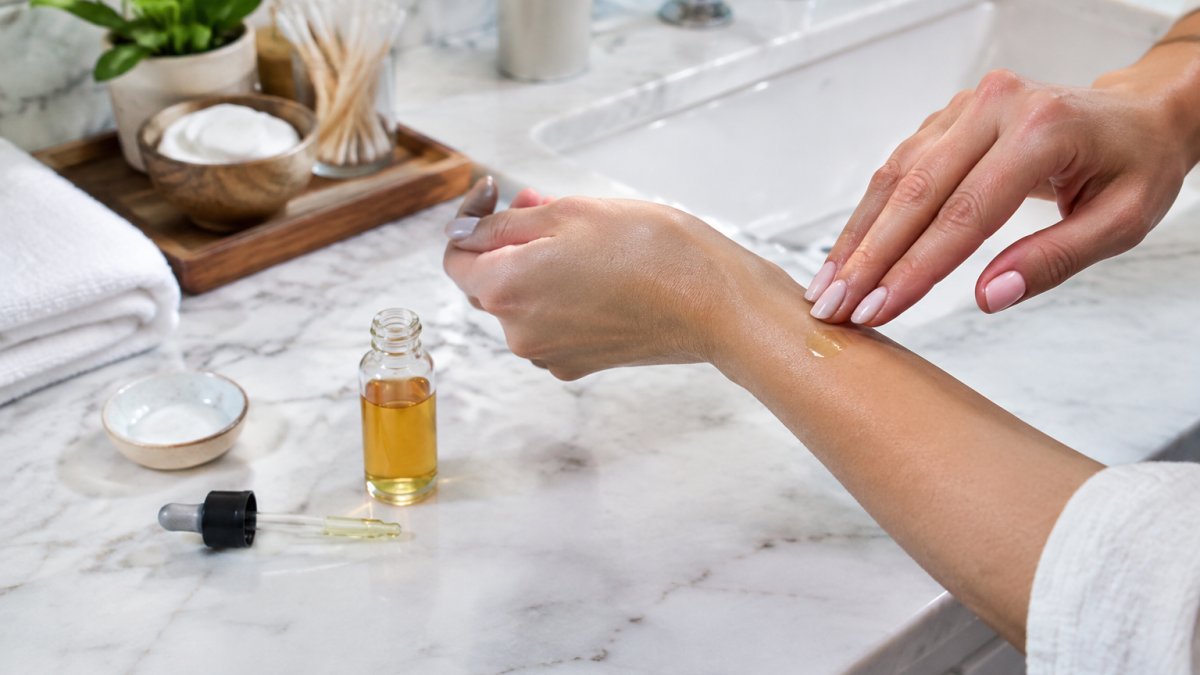
- Pick a test spot. Use the inner elbow, inside of the wrist, or behind the knee, thin areas that show reactions clearly.
- Clean and dry the area. Wash with a gentle cleanser, then pat dry.
- Apply a small amount. Dab a tiny drop over a quarter-sized area and leave it on.
- Repeat twice daily. Reapply morning and evening for seven to ten days.
- Watch for changes. Check for redness, itching, burning, stinging, or bumps.
- Wash off if you react. Rinse with water and stop using the oil.
Lady Mascheria Natural Beauty explains how to layer a facial oil with moisturizer once your patch test passes.
Watch out: Do not rub the oil in hard. Gentle dabbing is enough to test the skin.
The seven-day process breaks down into six steps, each with a clear action and timing, so you can follow along easily.
| Step | What to do | Time or frequency |
|---|---|---|
| Pick a test spot | Use inner elbow, inside of wrist, or behind knee | Before first use |
| Clean and dry the area | Wash with gentle cleanser, then pat dry | Before each test |
| Apply a small amount | Dab a tiny drop over quarter-sized area | Once per application |
| Repeat twice daily | Reapply morning and evening | Seven to ten days |
| Watch for changes | Check for redness, itching, burning, stinging, bumps | Throughout the test |
| Wash off if you react | Rinse with water and stop using the oil | Immediately if reaction occurs |
Signs of Allergic Reaction to Face Oil and What to Do
A reaction can look like redness, itching, swelling, or a raised rash (the NHS). Irritation usually fades within a day after you stop; a true allergic reaction can last longer and spread beyond the test spot.
If you notice swelling, blistering, or a growing rash, stop using the oil and see a doctor or pharmacist. Lady Mascheria Natural Beauty shares a daily routine built for sensitive skin.
Home patch testing cannot rule out every reaction, so keep using a new oil slowly after a clean test.
Frequently Asked Questions
How long should you leave a patch test on your skin?
Apply a small amount of the face oil to the test area twice daily and leave it on for seven to ten days, watching for any change. Reapply at the same time each day so you can see whether a reaction builds gradually. Skip rinsing unless the area itches or burns. If redness, swelling, a rash or stinging appears at any point, wash the area with lukewarm water and a gentle cleanser, stop using the oil, and check with a doctor or dermatologist before trying it again.
What are the signs of allergic reaction to face oil?
Watch for redness, itching, burning, stinging, swelling, small bumps or a rash at the test spot. Irritation usually stays within the area where the oil was applied and eases after you stop using it. A true allergic contact dermatitis reaction can spread beyond the test area, appear hours or days later, and last longer. Stop using the oil and seek medical advice if symptoms are severe, spread, or involve breathing difficulty or facial swelling.
Where is the best place to patch test a face oil?
The inner elbow, the inside of the wrist and the back of the knee are the most common test sites because the skin there is thin and reacts visibly. Apply the oil to a quarter-sized area on clean, dry skin. Because facial skin can react differently from body skin, a practical approach is to test on the jawline or behind the ear before applying the oil to the full face.
