

Quick Summary
To store handmade soap between uses, set it on a draining dish that lifts the bar off the surface, keep it out of shower spray and standing water, and let it dry in open air. Handmade bars soften quickly when they stay wet, so drainage and airflow matter most.
- Use a draining dish with raised ridges, slots, or a grate that lifts the bar off the surface.
- Keep the bar outside direct shower spray and off flat tub or sink ledges where water pools.
- Rinse after each use, then let the bar dry uncovered overnight in a spot with good airflow.
- Store unused bars in a cool, dry, dark place such as a closet shelf, not the bathroom cabinet.
- Do not seal a bar in plastic while it is still damp, because trapped moisture makes it sweat and soften.
Table of Contents
- Why Handmade Soap Needs Different Storage Than Store-Bought Bars
- Step 1: Choose a Soap Dish With Drainage for Handmade Soap
- Step 2: Keep the Bar Out of Standing Water and Direct Shower Spray
- Step 3: Let the Bar Dry Between Uses and Store It Overnight
- Storing Unused Bars Long Term: Cool, Dry and Out of Sunlight
- Your Next Step: Set Up a Drying Spot for Your Lavender, Rose Honey and Eucalyptus Bars
- Frequently Asked Questions
Why Handmade Soap Needs Different Storage Than Store-Bought Bars
Last Updated: November 6, 2026
Handmade soap is a different animal from the bar sitting on your drugstore shelf, and learning how to store handmade soap properly makes all the difference. A handmade bar made with olive, coconut and shea oils is softer, more natural, and far more sensitive to how it is stored. Learning how to store handmade soap between uses is the single habit that keeps a bar firm, clean and long-lasting.
Here is the core problem. Soap is made from oils and an alkali, and it is designed to dissolve slowly when it is wet. A bar that sits in a puddle of water turns mushy from the bottom up. Even a bar that stays in the shower can soften quickly if it never dries out. That is why most of the advice on handmade soap comes down to one principle: let it drain and let it breathe.
Our own bars reflect that approach. Lavender Soap, Eucalyptus Soap and Rose Honey Soap are made in small batches with natural oils, shea butter and goat milk. Because they are made with natural ingredients, the bar relies on you to keep it dry between uses.

Watch out: leaving a handmade bar in a closed soap case or on a wet ledge is the fastest way to ruin it. Trapped water softens the bottom of the bar within days.
Step 1: Choose a Soap Dish With Drainage for Handmade Soap
A draining soap dish is the foundation of good storage, but the right dish depends on the bar in front of you. A dish that works for a hard, well-cured olive-oil bar can be wrong for a soft goat-milk bar that holds more water.
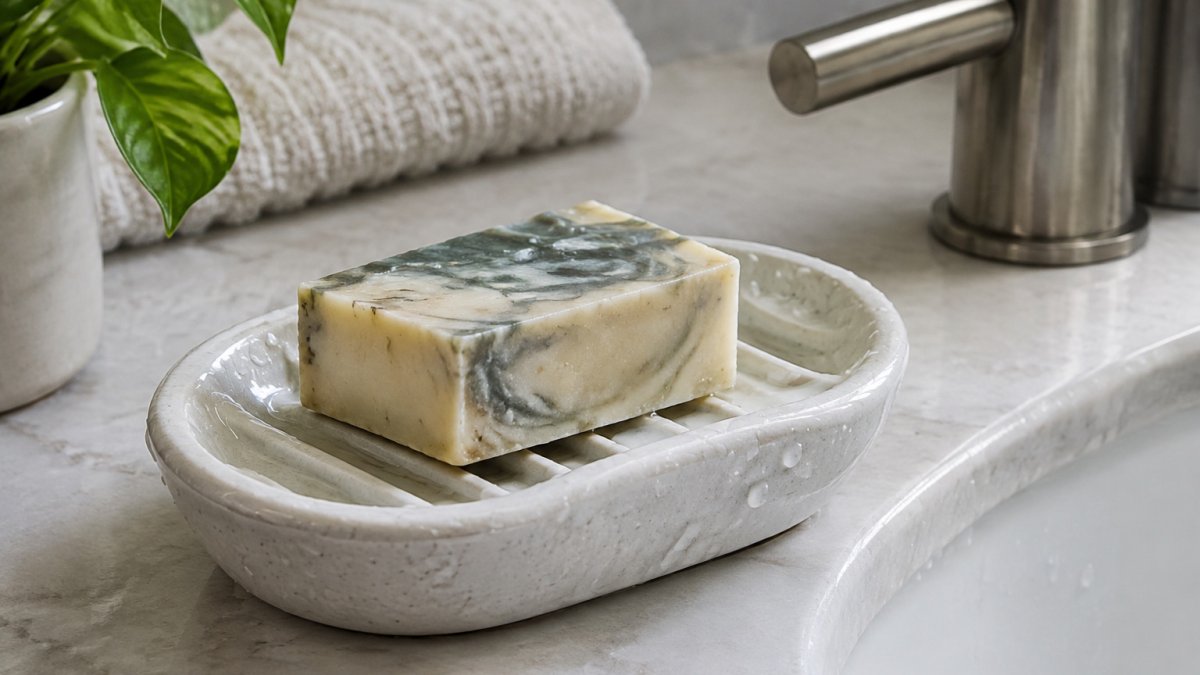
Start with drainage. Look for raised ridges, slots, or a grated surface so water runs off the bottom of the bar instead of pooling under it. A flat, solid dish looks neat but traps a puddle that softens the bar from the bottom up.
Material matters more than most people expect. Ceramic and stoneware are durable and easy to clean, but a glazed dish with deep wells can collect water if it is not tilted to drain. Bamboo and stainless steel racks let air move around the bar and dry faster, which helps in a steamy bathroom.
Size the dish to the bar. Handmade bars are often thicker and heavier than store-bought ones, so a dish that is too small leaves the edges hanging over and dripping onto the shelf.
Match the dish to the soap formulation. A hard, high-olive-oil bar that has cured for months can handle a simple ridged dish.
Watch out: a dish that drains well but sits in a puddle on the shelf will still keep the bar wet, so check that water leaving the dish does not pool around its base.
What to look for in a draining soap dish:
- Raised ridges, slots, or a grate that lifts the bar off the surface
- A slight slope or drain hole so water leaves the dish
- Ceramic, stoneware, bamboo, or stainless steel that is easy to rinse
- Enough width and depth for the full bar, including thick handmade cuts
- A base that does not sit in standing water on the shelf or tub ledge
To see how a bar looks on a draining dish, browse our Lavender Soap, which is a good example of a bar that benefits from airflow between uses.
The right draining dish depends on the bar, so match the dish to the soap's hardness and moisture.
| Soap type | Best dish | Key reason |
|---|---|---|
| Hard, well-cured olive-oil bar | Simple ridged dish | Handles basic drainage |
| Soft bar with high superfat or goat milk | Rack with more airflow | Holds moisture longer |
| Ceramic or stoneware | Tilt to drain | Deep wells can collect water |
| Bamboo or stainless steel rack | Steamy bathrooms | Air moves around the bar |
| Tight soap saver | Avoid | Presses plastic against the soap |
Step 2: Keep the Bar Out of Standing Water and Direct Shower Spray
Position matters as much as the dish. A bar placed directly under the shower head gets blasted with water every time you rinse, and it never gets a chance to dry. Move it to the side of the tub or onto a wall-mounted holder outside the spray zone.
Standing water is the other threat. Many sinks and tub ledges pool water after use. Keep the soap on a raised shelf or a suction-free wall rack rather than the flat edge of the basin.
Common mistakes to avoid:
- Resting the bar in the tub corner where water collects
- Placing it on the sink edge where the tap splashes
- Leaving it in a soap pouch or sealed container while it is still wet
Step 3: Let the Bar Dry Between Uses and Store It Overnight
Drying is what separates a bar that lasts from one that dissolves. After each use, rinse off any lather and let the bar sit uncovered in open air. Handmade bars need time to dry, so overnight storage in a spot with good airflow is a practical habit.
A simple routine works well: rinse, set on the draining dish, and leave it until morning. In the morning the bar should feel firm and dry on the surface. If it still feels damp, move it to a drier spot and give it more time.
Keep bars apart if you have more than one. Stacking wet soap bars traps moisture between them and slows drying. Space them out on the dish so air reaches every side.
Storing Unused Bars Long Term: Cool, Dry and Out of Sunlight
Storing an unused bar is different from daily care. A bar you are not using yet should live somewhere cool, dry, and dark, away from the bathroom humidity that drives daily wear. But how long it keeps, and how carefully you need to store it, depends on what is in the bar.
Start with the environment. A closet shelf or a drawer in a dry room works well for most bars. Aim for a spot that stays below roughly room temperature and away from steam, and keep spare bars out of direct sunlight, which can fade fragrance and warm the oils.
Adapt to your climate. In a humid bathroom or a warm climate, airflow matters more than insulation. Space bars so air can move between them, use a breathable wrap rather than plastic, and check stored bars more often.
Match storage to the formulation. A hard, high-olive-oil bar that has cured for several months is the most forgiving and can sit in a breathable wrap for a long time. A softer bar with a high superfat, goat milk, or a lot of glycerin holds moisture and is more prone to softening and rancidity, so keep it cooler, drier, and check it sooner.
Know the signs of degradation. A stored bar that has absorbed moisture may feel soft or tacky on the surface. A bar that is degrading may show discoloration, develop a stale or rancid odor, or lose its scent. Cracking can signal over-drying rather than spoilage.
Watch out: sealing a bar in plastic while it is still damp can cause it to sweat and soften, so make sure it is fully dry before wrapping it for storage.
Your Next Step: Set Up a Drying Spot for Your Lavender, Rose Honey and Eucalyptus Bars
Now put it into practice. Set up one draining dish near your shower, choose a dry shelf for spare bars, and start the overnight drying habit tonight. Three bars make a good starting set. Our Lavender Soap, Rose Honey Soap and Eucalyptus Soap each use natural oils and goat milk.

A simple setup for a week of handmade soap:
- One draining dish within reach of the shower but out of the spray
- One dry shelf or drawer for unused bars
- A daily habit of rinsing, drying and storing overnight
Start with the bar you use most.
Frequently Asked Questions
How should I store handmade soap to keep it fresh?
Keep the bar on a draining dish away from standing water, in a spot with airflow, and out of the direct shower stream. Let it dry fully between uses so it does not soften or turn mushy. For unused bars, wrap them loosely and store them in a cool, dry place away from direct sunlight.
How do you store handmade soap long term?
For long-term storage, keep unused bars in a cool, dry place with steady temperature and low humidity. Avoid bathrooms for storage, since steam and humidity speed up softening. Wrapping bars in paper or placing them in a cardboard box protects them from dust and moisture while still allowing them to breathe. Space bars apart so air can circulate, and check them periodically for softness, odor change or discoloration.
Should handmade soap dry out between uses?
Yes. Handmade soap should dry between uses. A bar that stays wet develops soft spots, shrinks faster and can become mushy. Letting it dry on a draining dish with airflow helps it hold its shape and lasts longer. Do not wrap a wet bar, and do not store it in a sealed container while it is still damp.
Can I store handmade soap in the fridge?
Refrigerating handmade soap is generally not necessary and can add moisture through condensation when the bar returns to room temperature. A cool, dry cupboard or drawer is a better option. If you do refrigerate a bar, keep it wrapped and allow it to come to room temperature gradually before use. Lady Mascheria Natural Beauty's Lavender Soap, Rose Honey Soap, Eucalyptus Soap and Peppermint Soap are each 120g bars.
